How to be an Ecologically Conscientious Traveller

Sustainability is a concept that has existed in various forms for generations. Our ancestors probably thought of it more in terms of thriftiness, while we are now aware of our carbon footprint. However we approach the issue, however, it’s an important one. We all want a better world for the next generation, and to do out part to make that happen. 

While we’re at home, we do our best to reduce, reuse and recycle. We compost and we use energy-efficient appliances and LED lights wherever we can. But we have less control over our waste and our ecological impact when we’re on vacation. We have to rely on the places we go to do a lot of that for us. 

In recent years, even chain hotels have started providing greener options, like reusing your towels instead of washing them every day, or having pump-dispensing soaps instead of tiny plastic individual bottles. However, a lot of the travel industry is based on the idea that everything is clean and new, and that you are the only person who has used this room. Of course, this fiction is absurd, but a lot of bleach has been expended to maintain the ruse. 

How Do We Measure Up?

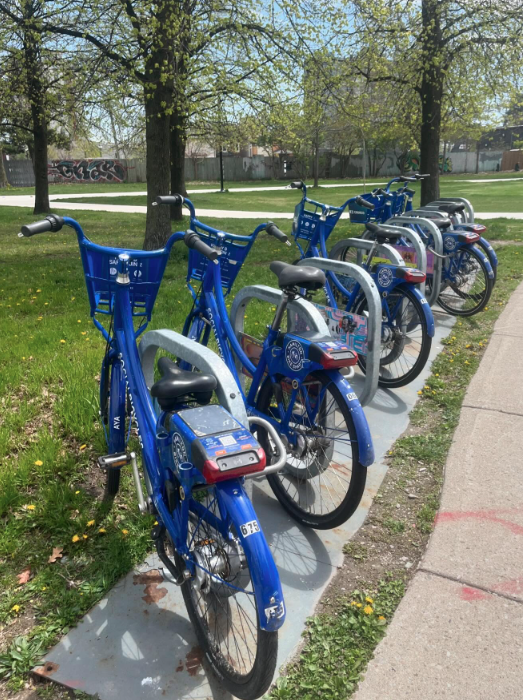
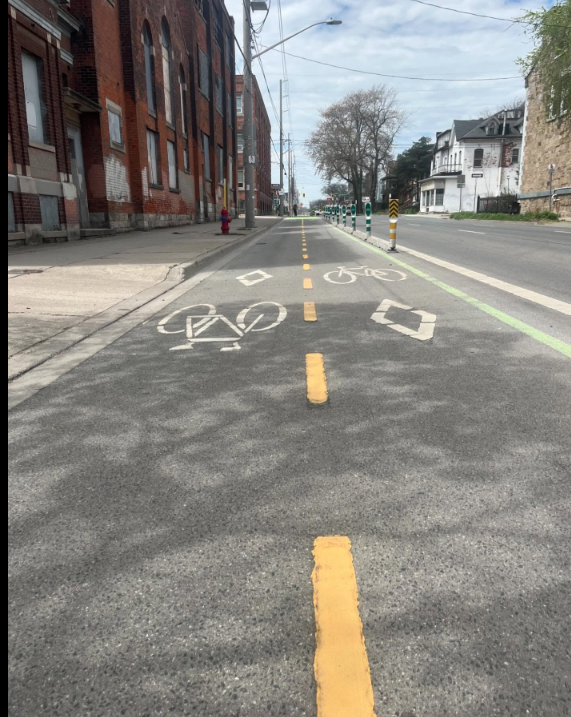
At the Pring Guesthouse, we embrace sustainability enthusiastically. As a hostel, of course, we reject all forms of single-use, over-packaged nonsense. All of our appliances are high-efficiency and all of our lights are low-wattage LEDs. Our shower heads, faucets and toilets are all water-wise and our garden is managed entirely with rainwater. We encourage guests to use public transport and active transport rather than driving. All our soaps and cleaning supply are low-packaging. We have several places in the building where guests can practice recycling. All of these things are obvious and should be standard across the accommodation industry. 

Perhaps most importantly in terms of sustainability, we have the privilege of being located in an old building – in fact, a heritage-listed mansion! The proper name for this – when an old building is used in a new way – is adaptive reuse. It has the benefit of only requiring retrofitting, rather than land being cleared, ecosystem disruption, or buildings to be demolished to make way for a new build.  

How Does That Work?

But when we think of ecologically friendly places, we generally envision something very modern, rather than a huge old house with numerous chandeliers. Grand spaces necessarily want to be seen to be lavish, or luxurious. Conspicuous wealth is a feature of old mansions, and ours is no exception. From the exquisitely turned rosewood railing on the central staircase to the astonishing curved doors on the living room, the Pring family wanted to show off their prestige. 

And who doesn’t want a bit of luxury when they’re on vacation? It makes no sense and it would be visually jarring if we were to take this grand building and make it look efficient and modern. So we have done what we can do to make those grand features work for us. The thickness of the walls (up to two feet in some places) and the shutters on the windows certainly insulate the building as well as any modern building. Furthermore, no trees have been chopped down, no dumpsters filled, and no wrecking balls employed. 

We do our best to walk the thin line. On one side, we have the conspicuous consumption that is expected in the tourism industry and in a heritage building. On the other, there is our sense of responsibility to our planet and generations to come. We are always open to any suggestions about where we can do better. Whether our guests want a comfort and luxury, or whether they want low ecological impact, we will always do our best to be sustainable. 

Posted in Uncategorized

Who Loves Amazing Hiking?

Imagine you had planned a vacation. As soon as the weather is nice in spring, you’re going to go and hike the Appalachian Trail. All winter, you’re looking forward to it. Then, for one reason and another, traveling to the USA suddenly doesn’t seem like a great idea. What do you do? This sort of dilemma has confronted many Canadians (and people from elsewhere in the world!) in the last several months. 

Fortunately, Hamilton has you covered. 

Hike the Bruce Trail

The Bruce Trail is over 900km of main trail and over 450km of side trails, along the beautiful Niagara Escarpment, which is a UNESCO protected biosphere. Hikers can do the whole thing – from the southern end on the Niagara River near Queenston, to the northern end near Tobermory. Alternatively, short hike sections might be a better option. 

There are several great hikes around Hamilton which are side-trails of the Bruce. They are of variable difficulty, and of course the weather can make all the difference. Majestic waterfalls and delicate wildflowers are perhaps best seen in spring. The majesty of the forest canopy and native fauna are a treat in summer. In autumn, the changing colours of the leaves are magnificent, as is the final flush of flowers. 

We cannot recommend highly enough that you check out the website of the Bruce Trail Conservancy, even if you are an experienced hiker! 

Did You Say Waterfalls? 

The Bruce Trail generally follows the Niagara Escarpment. That’s the huge rocky outcrop that is most famous for having Niagara Falls flowing over it. But, while Niagara Falls might be the biggest waterfall on the escarpment, it is by no means the only one. 

In Hamilton, we call the escarpment “the Mountain.” This can sometimes be confusing to visitors, as a mountain is really a very different type of geography. Whatever we call it, the number and variety of waterfalls that flow over it is truly impressive. There are more than 100 named waterfalls in the Hamilton area. Prioritizing which to visit will take a bit of research, but you can always come back and visit them again. 

We Love Hikers

Truth be told, we are not, ourselves, the most outdoorsy people. Besides a bit of gardening, your Pring hosts are mostly indoor animals. Hiking is not part of our usual leisure activities. However, ever since we first opened our doors and started welcoming in the world, we have had guests from all over the world with serious backpacks and very serious boots. 

One of the first of these was a young man from Germany, who had just arrived in Canada. He had previously hiked the Camino de Santiago in northern Spain and was looking for another life-changing adventure. However, he had been misinformed and arrived in Hamilton looking to hike the Queen Elizabeth Way – which, of course, is a freeway! We were able to direct him to the Bruce instead. 

Every year, we have many guests who stay with us while they are hiking all or part of the trail. We’re happy to welcome them and they’re happy to have a comfortable bed and a warm shower when they’re done! 

Tagged with: , , ,
Posted in Uncategorized

Sharing is Caring

The very concept of a backpackers’ hostel is that the accommodation is a shared space. This idea can be traced back to pilgrims’ trails across Europe and Asia, where the faithful would travel long distances to visit holy sites. Of course, Hamilton is not known worldwide as a particularly holy place (although we have had some people who visit with that in mind), but the model is the same. 

Often, cost is a primary factor, and travellers are looking for a place where they can cook their own meals, thus cutting down on food expenses. Other guests are particularly looking for a place where they can meet fellow-travellers. This is often for a shared experience, such as a concert or festival, but sometimes it is just for the joy of mingling and meeting new people. 

Fear of New People

Generally, people who dislike the idea of a hostel are afraid that they will be in danger in a shared space. They worry about theft or being attacked. They are used to the isolation of a standard hotel, with long hallways and locks on all the doors. The idea of meeting strangers, chatting together and eating together is alien to them when they think of their vacation.

Just last week, a couple arrived for their stay with us. They made their reservation online, encouraged by our excellent prices and stellar reviews. But – the bathrooms are shared? The TV is in a lounge that others can also use? Oh, no. We can’t possibly stay here. 

I am surprised when this sort of thing happens. Did they not make the reservation themselves, did they not read the descriptions of the guesthouse, did they not see the pictures? No – they saw two numbers: the price (low) and the reviews (high). I can only assume they were expecting some sort of cross between a low-cost motel and a high-end bed and breakfast. 

Respect and Learning

The alternative to this attitude is embodied by the majority of our guests. I spoke with one just yesterday, who talked happily of the time she backpacked across South-East Asia, meeting new people and trying new food. Going to the places the locals go and learning to speak some of the local languages. And sharing a dormitory with strangers? Not a problem. People are always so respectful, she said – they expect you to respect them, and they behave accordingly. 

As I have mentioned in a previous blog, a lot of our guests are international. We absolutely love that so many people are coming to Hamilton – which is not a city known to attract pilgrims! Perhaps we don’t have too many claims to international fame but, since 2010, we have had a backpackers’ hostel. And we are very happy to introduce our guests to the wonderful places that only the locals know. 

Posted in Uncategorized

An Exciting Spring in Hamilton

The first weekend in May is special to Hamilton. Of course, it’s peak spring and all the flowers are blooming and the trees are leafing out. But it’s more than that – our first weekend in May is Doors Open weekend. This year, from 10am to 4pm on Saturday, May 3rd and Sunday, May 4th, there will be a flurry of exciting, free events. 

Several years ago, we closed down our business for the two days so that we could invite the public into our heritage-designated building. It was so exciting! Hundreds of people on both days of the event, walking through the Pring, listening to the stories of the history of the building and seeing the unique architecture up close. One year, we even attempted to keep the business running and had both hostel guests and Doors Open guests at the same time. That was a bit too much. 

Explore the City

These days, we like to get out and see some of the venues ourselves. That’s made even easier now, because Doors Open includes walks between sites, where whole neighbourhoods can be explored. Not only that, but Hamilton’s Doors Open operates on the same days as Jane’s Walk Hamilton. It’s an amazing weekend to explore beautiful spaces and fascinating history. 

Further details will be online between now and May, as more sites and hosts sign up. But if you want to come and visit Hamilton, best to book now before we’re all booked out! We will be open and we will have maps and guides.

That’s not all!

That’s just one weekend! Hamilton is putting on a show all spring. There are concerts, plays and events of all kinds. A lot of them are within easy walking distance of the Guesthouse. For example, from April 23rd to 27th, Hamilton will hold the literary festival, GritLit – celebrating 20 years or great stories in Hamilton.

As the weather warms up, so does the activity. We’ve made it through winter and our reward is a full calendar of events. The difficult part is choosing between them!

Tagged with: , ,
Posted in Uncategorized

Mysterious Doors to Nowhere

Or, This Old House Volume II

There are countless eccentricities in a house this old. As we mentioned in a previous blog, the building we call home will be turning 170 in 2025 and it has had many owners and occupants over those years. While some owners have treated the place with care and improved it gently, others have been less careful. Even with the best of intentions, renovations can remove important architectural details, or even points of whimsy from years gone by. 

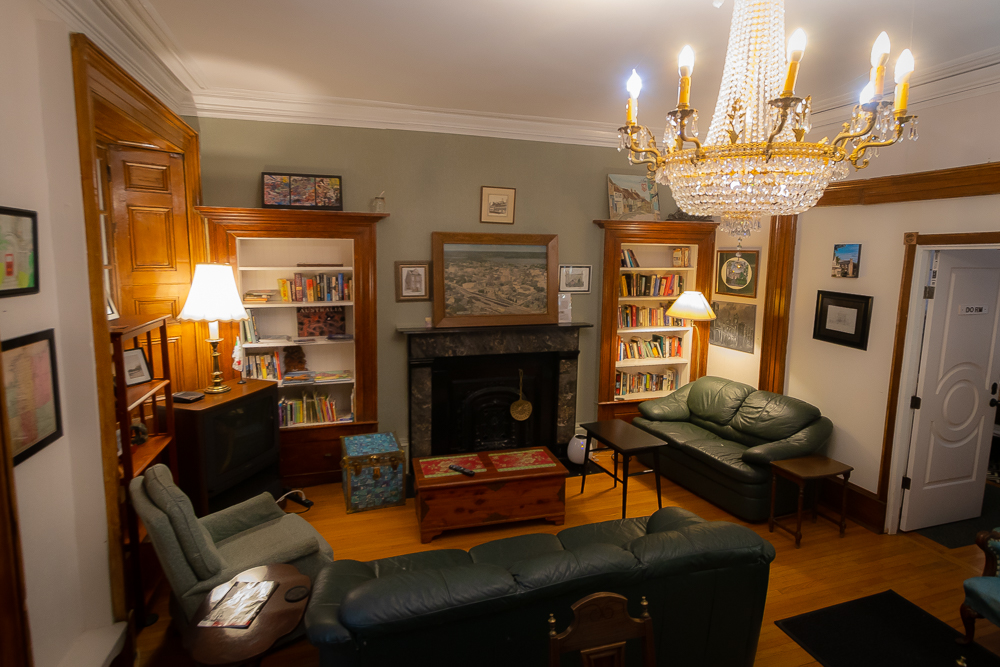
For example – somewhere in what is now our common room, there was once a dumbwaiter. We have no idea where. Possibly, somewhere to the southern end of the room, where the bookcases are now. We have a few theories about what that room might have looked like, back when it was first built. It’s possible that the room was once oval, and has since been made square at one end. Without original plans (lost, alas, to time), we can only speculate. 

Doors that Don’t Open

What we do know for sure, however, is that there are several doors to nowhere. Which is to say that there are doors which once opened onto a room, a staircase or a closet which are now purely decorative in nature. 

The most obvious of these is in the small bathroom on the ground floor. We discovered it while doing renovations in 2019 and decided to make it a feature. If you go around to the other side of the wall that this door is in, you will find a closet and inside that closet, no sign of the door! When we were doing the renovations, we discovered a cut in what is now a solid floor and deduced that this door once led down to the basement. It would have been a steep descent!

Guests who stay in the Beasley room, our ground floor private room, might not even notice the ghost door in the north-east corner of the room. It has been hidden quite well with trim. However, this door once opened into a space that has variously been a closet, a bathroom, and a staircase. If you head down our basement stairs, you will see the door on the landing opposite. Needless to say, it’s sealed tight!

One door that is still technically functional but which was probably never practical, is the second of our two curved doors in the common room. It is currently located behind the computer and opens to the hallway by the back door, where it is blocked by a closet. If the computer desk and closet were removed, you could go through this doorway – but it opens onto such a narrow hall that we suspect that it was only ever intended to make the room symmetrical.

Connecting Doors

There is a door between the back hall and the main hall, which is always open. There is a door between the dormitory and front hall which is always closed. Upstairs, there are phantom doors between almost every room. We speculate that these doors (and the transom windows above them, of which only a few still exist) were there to improve airflow and allow people to move about freely – but they could also be closed to keep spaces warm. 

It is fascinating when visiting old houses to try to figure out which doors are original and which have been moved. In large families, such as the Prings, how were bedrooms arranged, and family rooms used? I like to imagine the little Pring children running through these ghost doors, or maybe climbing into the dumbwaiter, or getting up to mischief scampering through the connecting rooms. 

Tagged with: , ,
Posted in Blog